
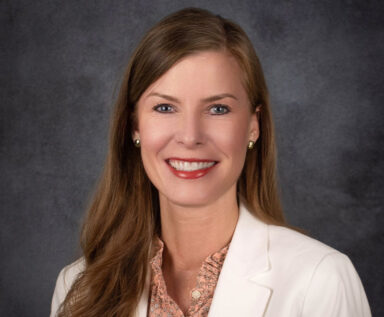
 Jorey Berry is the president and chief executive officer of the Immune Deficiency Foundation (IDF). In this role, she provides strategic leadership in partnership with the Board of Trustees and has operational responsibility for the management of staff and implementation of essential IDF programs that benefit the primary immunodeficiency (PI) community. Jorey promotes and fosters IDF’s unique mission, building relationships with key constituencies towards the goal of increasing the organization’s impact and improving outcomes. She holds a steadfast commitment to the IDF’s vision to improve the quality of life of every person affected by primary immunodeficiency so they can live the life they choose to live, with fewer health complications. Jorey is a nonprofit executive by trade and an advocate for the immunocompromised by choice.
BSTQ: You have spent most of your career doing advocacy work. What led you to the Immune Deficiency Foundation, and what makes your work there meaningful to you?
Berry: While I began my career as an English teacher and worked in state government for a time, I have continually observed and experienced the power nonprofits have to make a difference. That has driven my passion for advocacy and leveraging the work of exceptional nonprofits to transform the lives of individuals, as well as specific groups of people.
That attracted me to the opportunity with the Immune Deficiency Foundation four years ago. The organization had an established 45-year legacy of serving people living with primary immunodeficiency (PI). The focus on providing world-class educational materials, research to expand understanding of these rare conditions and groundbreaking advocacy improved the lives of people with PI and their families.
It is extremely meaningful for me to build upon the success the organization has achieved and lead our team of professionals to have an even greater impact on the future for people with compromised immune systems.
BSTQ: What is the Immune Deficiency Foundation’s mission? What makes it unique among other nonprofits?
Berry: The Immune Deficiency Foundation improves the diagnosis, treatment and quality of life for every person affected by PI — a group of more than 550 rare, chronic conditions where a part of the body’s immune system is missing or does not function correctly. All PIs are different, but they all disrupt the body’s immune system. They are also known as inborn errors of immunity.
Our organization works to foster a community that is connected, engaged and empowered through advocacy, education and research. We are unique in that we are focused on a group of rare diseases and conditions that impact the immune system. We are also unique in that we are a completely remote organization. Our staff of 43 team members is spread throughout the country, which helps us attract the best and brightest to advance our mission.
BSTQ: How is the Foundation involved in the plasma therapy industry?
Berry: Of the more than 550 types of PI diagnoses, the majority of them are treated with immune globulin therapy, which is plasma-derived therapy. This means we are inexorably linked to the plasma industry. For us, making certain there is an adequate, sustainable supply of source plasma is critical to ensuring the long-term health and well-being of the people we support.
A big part of our link to the industry is advocating for increased plasma donation in multiple ways.
BSTQ: The demand for human plasma continues to grow. What is driving this growth, and from your perspective, how can the industry best adapt to meet the increasing need?
Berry: The growth really comes down to medical progress. As researchers learn more about plasma-derived therapies, we’re finding new ways to help patients with immune deficiencies, hemophilia, neurological conditions and more. That’s wonderful news for patients who depend on these treatments — but it also means we need significantly more plasma to keep up with demand.
There’s no single solution here, but I think we need to be working on two fronts simultaneously:
First, getting more from each donation. The good news is that manufacturers are doing impressive work on this — developing better processes that increase efficiency and get more therapeutic product from the plasma collected.
Second, bringing in more donors. A lot of people just don’t realize how much impact plasma donation has. When you donate, you’re directly helping real people — maybe a child with a rare immune disorder who can finally go to school or someone who can live independently because of the therapy you made possible. We need to tell those stories better and help people see the tangible difference they’re making. That human connection is what motivates people to donate and keep coming back.
The bottom line is we can’t rely on just one approach if we’re going to meet the needs of patients who depend on these therapies.
BSTQ: The global supply of human plasma struggles to keep pace with growing demand. How is the Foundation helping to address this shortage?
Our team and our community are working to combat this challenge in a number of ways.
First off, we launched our Plasma Hero program during the pandemic to raise awareness of the need for plasma donation and to help educate people about the process and what steps they need to take to make a difference and become a donor. This includes step-by-step instructions, as well as a link to find a local plasma center near you. Our community views all donors as Plasma Heroes, and we feature the stories of dozens of donors on the website, sharing their motivations for donating and what their experience was like.
We also have a program where people living with PI who benefit from plasma-derived therapies volunteer to visit donation centers. They interact with staff and donors to express their gratitude firsthand and share the transformative impact the generosity of donors has on their life.
As I mentioned, we are also focused on raising awareness among the public and policymakers to do all we can to prevent barriers to plasma donation.
BSTQ: The Foundation has a rich history of advocating for plasma product safety. Is there an advocacy win or accomplishment you’re especially proud of?
Berry: I think what stands out for me is our ability to keep a finger on the pulse of the plasma industry and keep our community informed on what’s happening and what they need to know.
From opportunities to promote plasma donations to any product-specific information or recalls, we are proactive in sharing that information via social media or alerts on our website. People living with PI count on us to be their eyes and ears when it comes to plasma. We are proud to serve as that key conduit to information and resources for those who rely on these products to stay healthy and to stay alive.
BSTQ: Are there challenges in the plasma industry that keep you up at night?
Berry: Working to make certain there is a stable, safe supply of plasma-derived therapies is a huge priority for our community. So, we keep close tabs on the source plasma pipeline and stay in touch with companies in the industry for the latest information.
In terms of specific challenges, it is disappointing to see seemingly one-sided media coverage pop up from time to time that questions what motivates plasma donors. We know plasma donors are a diverse group with a diverse set of reasons for donating, and we celebrate them all! Simply put: Our community refers to plasma donors as heroes. Because to us, that’s exactly what they are.
BSTQ: Despite those challenges, are there opportunities in the plasma industry that excite you?
Berry: It is thrilling for our community to see when plasma donations earn positive, high-level exposure in the media or pop culture. We saw a little bit of that during the pandemic when Tom Hanks and other celebrities were donating convalescent plasma to treat COVID patients. Even though it wasn’t directly benefiting our patient community, it helped start conversations about and raise awareness of plasma donation.
More recently, we developed a relationship with Ironmouse, an online gamer/Vtuber who has an international following of 1.3 million people. Ironmouse is living with a form of PI and relies on regular infusions of a plasma-derived therapy to stay healthy. She has been an amazing advocate for PI and for plasma donation, sharing information about these topics with her massive online audience.
We hear from our partners in the plasma industry about the ‘mouse effect’ — they see tangible spikes in plasma donations any time Ironmouse talks about it during her livestreams or on social media. It is thrilling to see that direct impact.
Our work with Ironmouse is a shining example of finding new, previously unexplored avenues to drive awareness and inspire action around plasma donation.
BSTQ: The Immune Deficiency Foundation just celebrated its 45thyear in advocacy for the immune deficient population in December 2025. What do you think helped it reach this milestone? What’s next?
We continue to stay focused on meeting the evolving needs of people with immune deficiencies. That drives our mission and our work every day.
We are in the final stages of a long-term strategic planning process that has been exciting, challenging and eye-opening. We are looking at new ways to increase awareness of this set of conditions and how we can further reduce the time to diagnosis. We are also seeing how the work we do has applicability and benefit for other patient groups outside our core community.
More about Jorey Berry:
A results-oriented leader who places a high priority on establishing trust and stakeholder buy-in, Jorey quickly builds authentic relationships by listening to learn. She has a wide breadth of experience across multiple functional areas, including developing and implementing new operating models and leading transformation initiatives.
Jorey currently serves on the board of directors of the National Health Council, an organization focused on driving patient-centered health policy, providing a united voice for the 160 million people living with chronic diseases and disabilities.
Before joining IDF, Jorey was with the March of Dimes for 20 years. She held roles as vice president of change management, vice president of organizational effectiveness, area director, regional \director of public affairs and state director of public affairs. Having held key roles in volunteer development, mission, operations, revenue, culture change and internal communications, Jorey has developed a deep understanding of the nonprofit sector.
Prior to her tenure at the March of Dimes, Jorey worked in government relations for the Greater Houston Partnership, in the policy office of a former Texas governor and began her career as an English teacher. She earned her degree from Texas A&M University with a major in English and a minor in psychology.
Jorey resides in a small town outside of Austin and San Antonio, Texas, with her husband of 30 years and their goldendoodle Charlie and brown tabby Scout. She and her husband have a 27-year-old son who is currently in graduate school.